




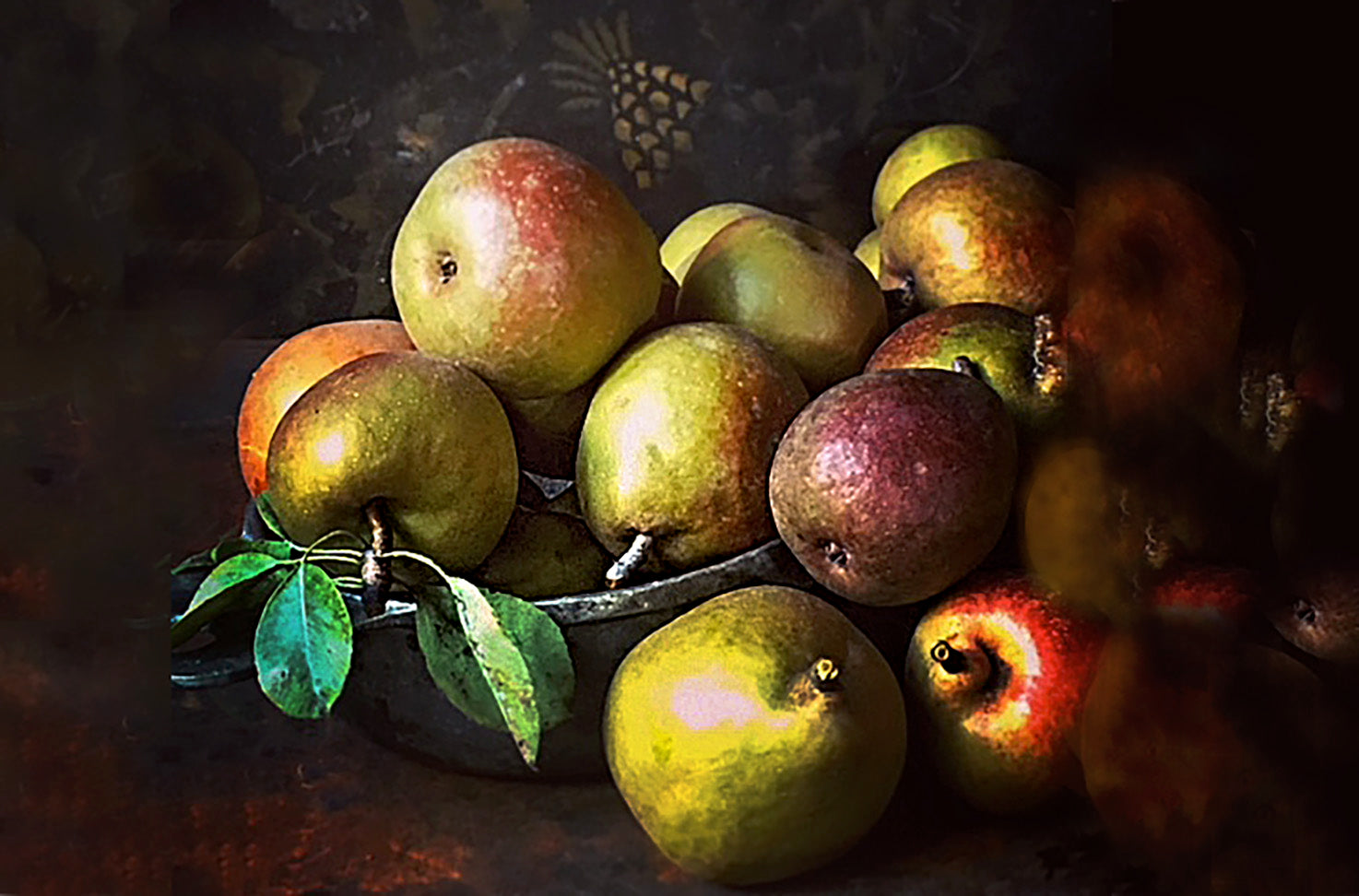
Judging by our lobed and fissured tomatoes and mottled fruit, we grow beautifully imperfect food at Stonegate Farm. Imperfect in the idealized, Apollonian sense, that is, but oh-so-perfect in the fabulous flavor, nutrient-density department.
There is something remarkable about a warm, unruly ravel of locally-grown, organic tomatoes, the kind of sensual squalor you don't get from the neatly marshalled packages found at the supermarket. These are what the French called love apples (they thought the pomme d'amour was an aphrodisiac). The Germans also have their Liebesapfel, and the Italians their pomi d'amore. It seems this little fruit gets around.
But grow them organically and their seduction lies deep beneath the skin. Organic is really a euphemism for misshapen beauty, or the Eastern aesthetic philosophy of wabi-sabi, where imperfection, transience, and asymmetry have more value, and are “more perfect” than perfection.
In Japan, for example, where the modern CSA movement, called TeiKei, began, wabi-sabi is central to their aesthetic philosophy. The more crazed and cracked the teapot, the wonkier the pear, the greater its integrity, beauty and value.
There is something beautiful in transience, in the faltering impermanence of living things, be it an over-ripe Shiro plum or even us.
Our closest approximation is Virgil’s Lacrimae rerum, or “tears of things,” but try and use that (or worse, quote Virgil) when selling anything in the new and improved West. So much of Eastern philosophy is simply lost in a land where the newer, shinier and more Botoxed the better.
Organic beauty has always been more than skin deep; in fact, its skin is often deeply flawed. With no toxic, petroleum armor to protect it, organic produce must fend for itself, relying on the skilled coddling of its growers..
Much of what we grow wouldn’t pass visual muster at the local Price Chopper, where isles of pesticide-infused sameness prevail. But our wabi-sabi veggies, greens and orchard-grown fruit–even the weathered siding of our century-old barns–have a deep and resonant beauty that you can’t get from mass production.
It’s no wonder the Japanese, with their non-western paradigms, created a partnering system between consumers and organic farmers, where they not only cooperated with each other, but also with the lovely imperfection of the natural world. They say that when you learn a new language, you acquire a new soul, and the language of organics is about working symbiotically with nature’s quirks and variations, not against them.
Maybe growing local and organic creates not only better food, but better philosophy.
Photography by Matthew Benson Foto


Leave a comment